Pages

Kamis, 04 Oktober 2012

In Virginia, the Bigotry of Crude Expectations

Recently (or not so recently by the time I'm posting this), the state of Virginia was granted a waiver from NCLB requirements. This has been a relief for many, but it's also caused further stress, in that it exchanges one yoke for another. Fairfax County, for example, had no plans to evaluate their teachers according to the standardized test scores of their students, but now is being required to due to conditions of the waiver.

However, because the goals in the waiver application for some children are lower than for others, there have also been cries of low expectations and racismVirginia has since re-written their goals. Certainly, we should not have one set of expectations for one set of children and a lower one for another set simply based on their socio-economic status or race--the outcry is understandable. 

But, to me, those folks have got their eyes on the wrong prize. If boosting scores on low-quality multiple choice tests is their greatest educational goal for Virginia's children, then they've got very low and crude expectations in the first place, and our schools and our children will only rise so high as the low and crude expectation that have been set.

This past summer, I finally read Linda Darling-Hammond's great work, The Flat World and Education. From that, it's clear that Virginia schools also need "adequate funding and equitable opportunities to learn" and "intelligent, reciprocal accountability:"
In the current prevailing paradigm in the United States, accountability has been defined primarily as the administration of tests and the attachment of sanctions to low scores. Yet, from the perspective of children and parents, this approach does not ensure high-quality teaching each year, nor does it ensure that students have the courses, books, materials, supports services, and other resources they need to learn. In this paradigm, two-way accountability does not exist: Although the child and the school are accountable to the state for test performance, the state is not accountable to the child or school for providing adequate educational resources.
Furthermore, test-based accountability schemes have sometimes undermined education for the most vulnerable students, by narrowing curriculum and by creating incentives to exclude low-achieving students in order to boost test scores. Indeed, although tests can provide some of the information needed for an accountability system, they are not the system itself. Genuine accountability should heighten the probability of good practices occurring for all students, reduce the probability of harmful practice, and ensure that there are self-corrective mechanisms in the system--feedback, assessments, , and incentives--that support continual improvement. 
If education is to actually improve and the system is to be accountable  to students, accountability should be focused on ensuring the competence of teachers and leaders, the quality of instruction, and the adequacy of resources, as well as the capacity of the system to trigger improvements. In addition to standards of learning for students, which focus on the system's efforts on meaningful goals, this will require standards of practice that can guide professional training, development, teaching, and management at the classroom, school, and system levels, and opportunity to learn standards that ensure appropriate re sources to achieve desired outcomes. (p. 301)

In Virginia, many make the mistake of using "achievement" and "test scores" interchangeably, as if that's all achievement is. What about research papers, essays, and creative and analytic writing? What about works of art and musical performances? What about science projects, spelling bees, reading olympics, robotics contests, debate clubs, student government, conflict resolution, and mini-UN? What about vocational education? What about teacher-generated assessments and tests? What about looking at the education of ALL of Virginia's children like this Virginia superintendent does? Oh right, subjects beyond reading and math are not important, especially not for low-income children and children of color who need to get their math and reading test scores up before they can engage in rich and meaningful learning. For sub group students, it's "test scores" as "achievement" first and only. 

As long as policy makers and pundits continue to conflate "achievement" with "test scores," and as long as the public accepts that, the achievement gap will remain. As long as opportunity and equity gaps remain, so will the achievement gap. Excluding students who struggle to score high enough on low-quality standardized tests from participating in rich and meaningful learning and making test scores the currency of our public education system is the lowest expectation of all.

Selasa, 02 Oktober 2012

Equity, Performance, and Employee Compensation

Every employee at UW-Madison believes they deserve to be paid more, and the vast majority are right. It's time we recognize and begin to address the fact that most workers across Wisconsin are underpaid--in UW and far beyond. Increasing compensation for everyone in the bottom half of the income distribution should be a state and national priority, especially given the evident and long-lasting consequences of widening income inequality.

Unfortunately, the HR Design plan at UW-Madison is nearly silent on the issue of raising compensation for all currently underpaid employees. Instead, it focuses on how compensation levels will be determined and how raises will be distributed when money is available.  It does nothing whatsoever to make sure more money is available. Remember that-- don't allow the desire for more pay to lead you to blindly accept the terms of a plan that doesn't bring more pay but rather changes the terms on which you are paid.  

The biggest change related to compensation in the HR Design is the new and explicit attention to "market competitiveness" in setting compensation levels and determining raises. This is a response to the status quo, which has been identified as a problem with this statement:

"State law prohibits UW–Madison from giving unclassified employees performance-based pay raises unless they are part of an annual pay plan—and there has not been a pay plan in four years" (p. 24).  

What exactly is the problem?  Is it that performance pay cannot be given outside of annual pay plans? Or is it that there hasn't been a pay plan in 4 years? These are two separate issues, and should be tackled separately.  The first is about pay equity, and the second is about the consequences of austerity agendas.  Current discussions conflate these issues-- employees are upset about the lack of a pay plan and thus some are desperate to agree to anything that leads to pay, for anyone, no matter the consequence. That's a recipe for disaster.

It seems the HR team has concluded that the former issue must be addressed and therefore proposed mechanisms for awarding performance pay even in the absence of a pay plan by calling for a model that "balances market competitiveness and internal equity."  Essentially, instead of developing a new model for UW-Madison that leverages scarce resources for fair and humane treatment of all employees, this model opens the door to further growth in salary inequities across and within units.  It does this by promoting salary increases based at least partly on market competitiveness without explicitly requiring attention to internal equity, as part of both the compensation philosophy and the roles and responsibilities of managers.

The reasoning provided for this approach is fallible. We are told that employees want their pay based on market competitiveness-- yet the survey questions utilized in the employee polls ask about these issues in isolation. A better approach would ask employees to rank their preferences-- a pay plan distributed equitably, with some additional pay for performance; pay distributed inequitably, with no overall pay plan provided, etc. In other words, when presented with a false choice, it isn't at all surprising that employees choose to protect themselves. But what we're given here isn't our only option.

A review of extant research leads me to conclude that pay for performance has uneven effects in environments like UW-Madison. The main issue at Madison and across Wisconsin is that pay levels are low-- not that they aren't tied to performance.  Tying pay to a combination of performance and equity will reduce, not enhance, the transparency of the compensation process, and thus likely increase the sense of injustice that already pervades campus.  Basing pay on an unspecified assessment of market value will lead employees to feel even more left out of the process, making them even unhappier. In other words, it is likely that HR Design will do nothing to improve the feelings among UW employees that their compensation levels are unfair and inappropriate.   It may even make things worse.

As an alternative, I therefore propose the following revisions to the HR Design's compensation plans:

(1) Make internal equity a priority in the setting of compensation by describing it as an explicit priority central to the compensation philosophy and part of the compensation function's roles and responsibilities.  Educational institutions are unique environments that place a priority on collaboration, including across disciplines, and it is for the good of our teaching and research at UW-Madison that we be allowed to prioritize internal equity when distributing any and all forms of compensation.  This is an essential revision of state statutes and one we should fight for.

(2) Clearly define the terms "market," "performance," and "merit" in the plan and delineate among them. Be clear, which types of pay result in base increases, and which do not?

(3) Provide explicit guidance to managers working with employees who work across units or in interdisciplinary settings. These areas are where pay based on markets are likely to do the most harm - imagine the sociologist teaching alongside the economist in the same department, where the latter professor (most often a male) out-earns the former (usually a female) 2 to 1. It happens under our current system, and is demonstrably counterproductive. These are the types of problems we can and should fix in order to enhance our ability to retain workers and ensure their flourishing.

(4) Include all employees-- included contracted employees--in the plan to provide a living wage.
 The only people who will clearly benefit from HR Design in terms of current base pay are those at the bottom of the pay scale who will remain university staff and will now receive a living wage under this plan.  The number of people meeting that description is not mentioned in the plan.  That number should be considered in relation to the likely number of jobs that are currently university staff jobs and will instead be contracted out to save the university money. The City of Madison pays living wages to all contractors on contract over $5,000.

UW-Madison should take the lead in reducing income inequality in Wisconsin, not exacerbating it. We are national leaders when it comes to our collective devotion to our work, and that strong intrinsic motivation should be leveraged whenever and wherever possible.  No, it should not be exploited--as it now is-- to justify underpaying us. But do not let the poor practices of our neighbors compel us to lose what's great about our community--we have no desire to become a "winner take all" society.

10 Apps for Documenting Learning

One of the things that really excites me about the iPad is the ability of the students to show their learning. I am not talking about the end product here, I am talking about the act of learning that can be shown by students recording their processes. It is often about the student putting the information they have learnt into a context. It is this contextualisation that helps the students create meaning. Here is a perfect example from a young 1st grade student who talks us through his investigation into transport. This example was shown on a recent school visit as one way a student could document their own learning. Our Lady of the Angels, Rouse Hill is an exemplar school combining principles of contemporary pedagogy with contemporary learning spaces.


This is where we really see the mechanics of a student's learning and how this can be individual for each student and in the case of a tool like the iPad, individualised for each student.

Here are a couple of apps that give students the opportunity to showcase, share and then reflect on their learning. Enjoy, some of these double up as my favourite apps too.


ShowMe: FREE
Turn your iPad into your personal interactive whiteboard! ShowMe allows you to record voice-over whiteboard tutorials and share them online. It’s an intuitive app that anyone will find extremely easy to use, regardless of age or background. Record and share what you know about any subject.

http://itunes.apple.com/au/app/showme/id445066279?mt=8


ExplainEverythng: $2.99 AU
Explain Everything is an easy-to-use tool that lets you annotate, animate, and narrate explanations and presentations. You can create dynamic interactive lessons, activities, assessments, and tutorials using Explain Everything's flexible and integrated design. Use Explain Everything as an interactive whiteboard using the iPad 2

http://itunes.apple.com/au/app/explain-everything/id431493086?mt=8


Educreations: FREE
Educreations turns your iPad into a recordable whiteboard. Creating a great video tutorial is as simple as touching, tapping and talking. Explain a math formula or create an animated lesson. With voice recording, realistic digital ink, photos and text, and simple sharing through email, Facebook or Twitter, now you can broadcast your ideas from anywhere.

http://itunes.apple.com/au/app/educreations/id478617061?mt=8


ScreenChomp: FREE
A simple doodling board, markers, and one-click sharing tools make spreading your ideas and know-how easy and fun! Just - Record It. Sketch It. Share It. - to create a sharable, replay-able video that tells your story clearly. Touch record to capture your touch interactions and audio instructions on a plain background, or an image from your iPad camera roll.

http://itunes.apple.com/au/app/screenchomp/id442415881?mt=8


DoodleCast Pro: $1.99
Doodlecast Pro is the easiest way to create presentations on your iPad. The app records your voice as you draw to create quick presentations. Doodlecast Pro saves videos to the camera roll making it easy to import them into popular video editors or presentation tools such as iMovie, Keynote, or iBooks Author. Perfect for teachers or students.

http://itunes.apple.com/au/app/doodlecast-pro/id469486202?mt=8

Replay Notes: $5.49
ReplayNote is an app that records your writing and voice, then converts it to YouTube video. (screencast) You can create a video and share it just by clicking a few buttons. It is quite easy to create educational videos using ReplayNote. Or you can record meetings, or you can ask questions or explain something which cannot be easily expressed with text.

http://itunes.apple.com/au/app/replaynote/id419786855?mt=8


Board Cam: $5.49 AU
Board Cam transforms your iPad in an enhanced document camera or a whiteboard. Perform live dynamic presentations of objects, interact with images stored in your device, draw on a whiteboard or over video streaming without changing of application...while you record videos!

http://itunes.apple.com/au/app/board-cam/id434217477?mt=8


Voicethread: FREE
Create and share dynamic conversations around documents, snapshots, diagrams and videos -- basically anything there is to talk about. You can talk, type, and draw right on the screen. VoiceThread takes your conversations to the next level, capturing your presence, not just your comments.

http://itunes.apple.com/au/app/voicethread/id465159110?mt=8


Skitch: FREE
Skitch is a image annotation tool.Use shapes, arrows, sketches and text annotation to get your point across fast. Point out objects and locations in a photo, brainstorm design ideas with your team, identify a point of interest on a map, annotate a screenshot or webpages, then share them with anyone you like.

http://itunes.apple.com/au/app/skitch/id490505997?mt=8

Draw on Slides: $0.99 AU
Draw on Slides lets you show your iPad photos to family, friends, and business associates and draw attention to specific details about each one. Make your point and keep their attention at the same time. Select the album with your photos, pick the first photo to show, and draw on any photo as you navigate from slide to slide.

http://itunes.apple.com/au/app/draw-on-slides/id500007683?mt=8


HR Design Meeting: The Community Speaks

My sources tell me that Varsity Hall in Union South was completely packed for today's meeting on HR Design.  At this "informational session" the HR team spoke for 60 minutes, leaving just 30 minutes for Q & A.

During that time, 18 people were able to ask questions.  Here's the list-- some people repeated a question when the first iteration did not get a satisfactory answer  I'm told the most frequent responses  from the team were "There is no easy answer" and "There is no one answer."
  1. If there is a perception of hierarchy [between the academic and classified staff], why has the faculty not been included in this process?
  2. In which category (academic or the new university staff) do the trades fit?  Will pay increases (living wage?) be honored?
  3. How was data used in these plans?  
  4. What are the current plans for staff diversity?
  5. What does governance mean for university (classified) staff? 
  6. How are salaries affected by the compensation plans (flexibility and living wages)? 
  7. What is university staff governance?  It is compared to the academic staff version, but many of us don't know what that means.
  8. What are the advantages of moving or staying in the current classified staff system?
  9. Which changes apply to student hourlies?  Does the living wage apply?
  10. What is the difference between a student living wage and the living wage mentioned for other staff?
  11. The faculty are managers, but have no training.  How will they be held accountable?
  12. How will employees and managers be held accountable?
  13. The HR committee needs to realize faculty are not interested in HR and the hierarchy will not disappear.  They are overwhelmed and have no time for administrative tasks.  They need more support.  You can't expect that type of cultural change from a training.
  14. What is the minimum living wage?
  15. What if these changes doesn't get approved in time, and implementation is held up?
  16. How are retiring staff affected?
  17. How is collective bargaining affected?
  18. What assurance do we have that merit pay is not another form of favoritism?  We need a system that is fair to everyone.

These are good questions. I wonder how many people on campus even know this process is occurring...

Just the "Facts" on HR Design

Yesterday's Faculty Senate meeting at UW-Madison provided a wonderful illustration of how the cycle of widening economic inequality is regenerated through the actions of colleges and universities.
A Word Cloud Illustration of the Terms Contained in HR Design's Strategic Plan Components.  Word size is relative to frequency in document. 
Here's a thumbnail sketch of the process leading to the prioritization of markets over equity as depicted above. (In case you can't find it, "equity" is that tiny word hidden under "Job" on the left, above)

  1. Wisconsin's conservative politicians slash investments in public higher education. This is a necessary but not sufficient condition for the reduction of human capital formation via public institutions.  The following steps are also required.
  2. Public colleges and universities struggle to respond. They have multiple options, one of which is to fight the disinvestment while protecting its most vulnerable programs, employees, and students, but instead they adopt a suggestion provided by fiscally conservative liberals: turn to the market for ideas and support!
  3. University administrators promote a new set of principles for the allocation of resources based on market rationales-- efficiency, effectiveness, and performance! Of course equity will be preserved, they say, but that's "up to you and your managers-- the power is all yours and the devil is in the details!" Yep, sure is.
  4. These new principles and plans are developed "in collaboration" with the very few faculty, staff, and students who, in the midst of great economic and time constraints, are actually available for these discussions.  The "opportunity" for a new model is repeatedly emphasized as an inherently good thing, a wise thing, and one that will help us "help ourselves." These discussions result in a set of stylized proposals resting on unquestioned assumptions.
  5. The plans are presented to "stakeholders."  They are described as based on "facts" of unquestionable validity and declared "not part of an effort to corporatize the university."  Such declarations are made without justification-- but because stakeholders are insufficiently equipped to respond, time-constrained, exhausted from overwork, and accustomed to being ignored by the administration, few offered any questions.
  6. Thus, even the faculty-- purportedly the best-educated stakeholders-- sit quietly.  Unquestioning. No sifting and winnowing.  Happy to have someone else solve their "problems," especially if it means money will soon enter their pockets.
  7. And with that, university administration has "engaged" its publics in the relevant discussions and can proceed with its plans.  It will pass the new agenda through all channels and deliver it, fully rubber-stamped, back to the gleeful Legislature.
  8. Thus, we in higher education have "helped ourselves." 
  9. Fast forward 5 years:  in many units, the gap in pay between research staff employed in high-demand fields and those assisting with teaching and learning will have grown.  Substantial numbers of jobs will move from employee to contractor status, since the new system guarantees a living wage only to employees-- not contractors-- and as we know, living wages are expensive! The number of mid-level bureaucrats (managers) on campus will have doubled and increased their power, as they now control budgets through their special analyses of employees' market value.  But it will be impossible to document all of these changes since the data will continue to be held in an administrative unit that decides how it displays results and is only required to respond to request from administrators, not employees. 
But don't worry, folks, this isn't corporatization.

And never fear, since shared governance will continue to reign.  If by that term, you mean that employees will have "input."


Notes:

1. Bob Lavigna pronounced the HR plan "not corporatization" three times during yesterday's Faculty Senate meeting.
2. While Lavigna said that shared governance meant "joint decision-making" (in response to a question I raised) the HR plan never mentions joint decision-making and instead mentions "input" 19 times.


Senin, 01 Oktober 2012

Haiku Deck - Presentation Trump Card

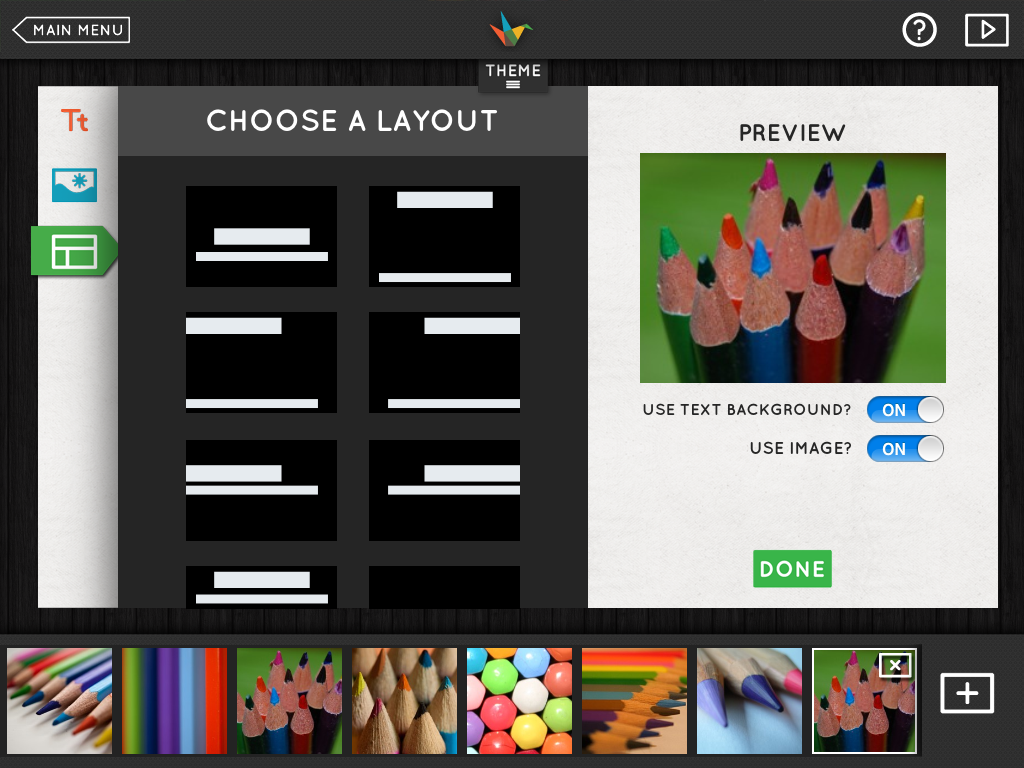
I came across Haiku Deck this morning. I have been aware of this app for some time but have resisted the urge to have a look because in my mind it was just another slide presentation tool. How wrong could I be! I love this presentation app. It is so simple.

Simple is also a word that springs to mind when talking about this app and from a teachers point of view - this is important when it comes to students. This app is appropriate for students from infants right through to senior secondary.

This is content creation at its easiest. The touch and swipe environment has been utilised to ensure a quick and easy presentation in next to no time. Select a theme, use your own images or let Haiku Deck present you with a plethora of images from the in-built Creative Commons image search. This is itself great practice to be modelling to students.

These images come from across the internet from photographers who have licensed them under Creative Commons. Some of them have a "not for commercial use" restriction but Haiku Deck allows you to filter the type of CC images you are provided with.


Once you have your slide background, select the style and placement of your text and enter it in. If you want to include charts or tables, create them and then save as an image. This allows you to import them just like any other image - alternatively you could share your Haiku Deck to Powerpoint and add a chart that way.

The slide display at the bottom of the screen illustrates all your slides but it also allows you to drag and drop to change the order of the slides. It is these type of features that really impress me with this app. Other features that seem small but that are also convenient include touch screen cursor placement, copying and pasting for multiple image searches and the ability to embed the presentations in your website or blog.


Equally impressive is the ability to share your Deck via Facebook, Twitter or email. Not only can you transfer the presentation to your teacher or other students but these can also be viewed on any device with a web browser. This multi platform any device usage is so important for schools. This also suits any BYOD schools.

Finally I am an Analytics fan so the ability to have views of your Haiku Deck presentation represented as a graphic is another great feature. From an educational point of view it is also a way of gauging information about an authentic audience to a student's presentation.

A big thumbs up from me! Well done to all involved at Giant Thinkwell.


More Questions on HR Design

In advance of this afternoon's meeting, I received this very helpful document from the Wisconsin University Union, which summarizes the HR Design plan elements and how they compare to current practice, while raising some critical questions about each element.

Here are some questions that I think are especially deserving of response:

  • Will the university staff assembly, created by HR Design, preempt or potentially undermine the re-establishment of unions?  
  • Why aren’t all contractors (over $5K) included in the living wage provisions, consistent with the City of Madison policy? UW has shifted to using contractors for custodial and food-service positions, and currently pays custodians just $8/hour. 
  • What provisions prevent a hiring authority from defining the “employing unit” as so limited as to “force” a layoff? 
  • What is the evaluation plan to assess the impacts of these radical changes?